Literature
Collection of poetry
Amīr Khusraw Dihlavī, ca. 1253-1325
30 Ramaḍān -- 22 Dhū al-Ḥijjah 1017 AH / 1609 CE
From the archive
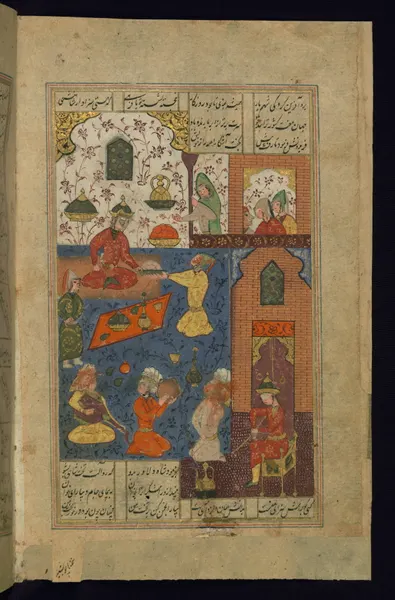
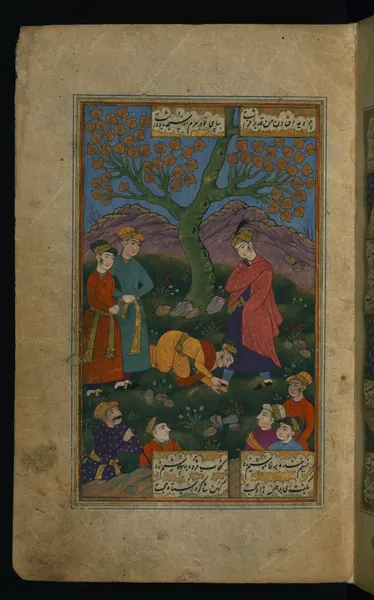
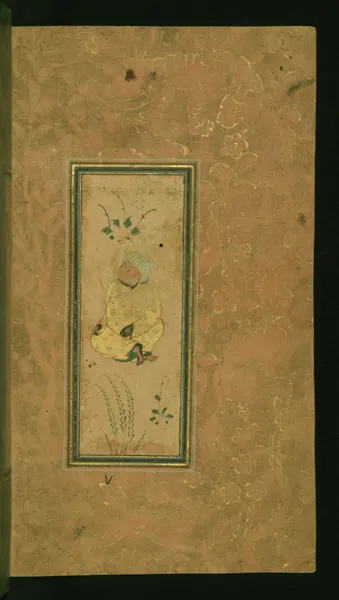
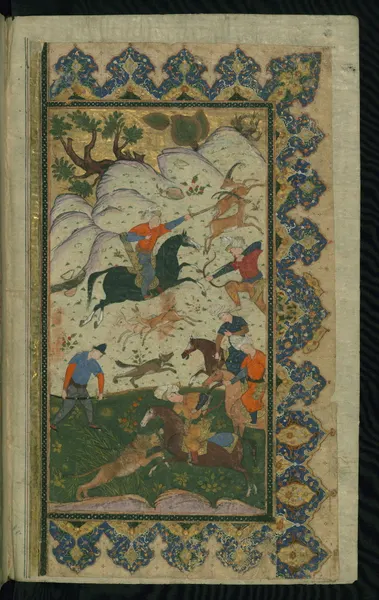
This illuminated and illustrated manuscript contains the Khamsah (quintet) and two historical poems (masnavi), Qirān-i saʿdayn and Nuh sipihr, by Amīr Khusraw Dihlavī (d. 725 AH / 1325 CE). The codex is dated 1017 AH / 1609 CE and was produced in Safavid Iran. All texts are written in black nastaʿlīq script with chapter headings in red. The manuscript opens with an illuminated and illustrated frontispiece of a hunting and court scene in the early Safavid style (fols. 1b-2a). The first text is Khamsah-i Dihlavī (fols. 2b-192a), which is introduced by an illuminated incipit and titlepiece with the title of the first poem of the quintet and the author's name. The second text is Qirān-i saʿdayn, a historical poem (masnavi) about the meeting of Sultan Muʿizz al-Dīn Kayqubād and his father, Nāṣir al-Din Bughrā Khān, on the banks of the Sarjū in Oudh. It is also introduced with an illuminated incipit and titlepiece (fol. 193b). The third text is Nuh sipihr, a historical poem (masnavi) describing the glories of Sultan Quṭb al-Dīn Mubārak Shāh Khaljī’s time, introduced with an illuminated incipit and headpiece (fol. 223b). The dark brown leather binding is original to the manuscript.
- Place of origin
- Iran
- Language
- The primary language in this manuscript is Persian.
The record behind the work
Place & date
Manuscript TEI origin: “Iran”. Dates describe this physical manuscript, not the author's life or the work's first composition.
Source & reuse
Walters Art Museum ↗
Source ID: W.623
CC0 — digitized manuscript images and catalog metadata from The Walters Art Museum, United States.
CC0 — The Walters Art Museum